Tuesday, April 4, 2017

Allen Dental Spreads Awareness for Oral Cancer During the Month of April

We at Allen Dental pay particular attention to oral cancer. That’s because April is Oral Cancer Awareness Month. We are so proud to say that all of us at Allen Dental are committed to doing our part to spread education and awareness on oral cancer not just during the month of April, but during every month of every calendar year: Oral and pharyngeal cancer is cancer of the mouth and throat. 

Etberqryufc ux3fgwl57jwihxcjejyyuau7hgi1air19vs0w1snkym5rc57rn4wzgjtopb9r6p0qxr68rynt9udtnyzdihq7vax0mkkk5as ceogiplmcorkd4njy3j qkjx y2

According to the American Association of Oral and Maxillofacial Surgeons, or the AAOMS, the scary truth is that oral cancer collectively kills nearly one person every hour, of every day of every year. If that isn’t a frightening and humbling statistic, we don’t know what is.  The AAOMS also states that of those that are newly diagnosed with oral cancer, it’s sad to say that only about 60% of those will live longer than 5 years. Why so high? Because oral cancers are often discovered too late in the cancer’s growth process. 

Those diagnosed with a form of oral cancer can suffer from a number of physically and emotionally painful consequences as well. Severe facial disfigurements or difficulties eating and speaking are often associated with oral cancer, even if you are among the 60% who survive.
During this month of April in particular, we at Allen Dental strongly encourage you to not be among these frightening statistics. It is crucial to participate in an oral cancer screening at least once a year to prevent this terrible ailment.

Allen Dental is committed to keeping you and your mouth as happy as possible. We do our part in protecting the precious asset that is your mouth by expertly fixing the problems that occur, and by giving you the education to proactively protect yourself and remain as healthy as possible. Contact Allen Dental by phone to set up an appointment at 608-786-3303. You can also request an appointment on our website. We look forward to seeing you in the near future and to keeping your mouth happy and healthy in every way.

Thursday, March 2, 2017

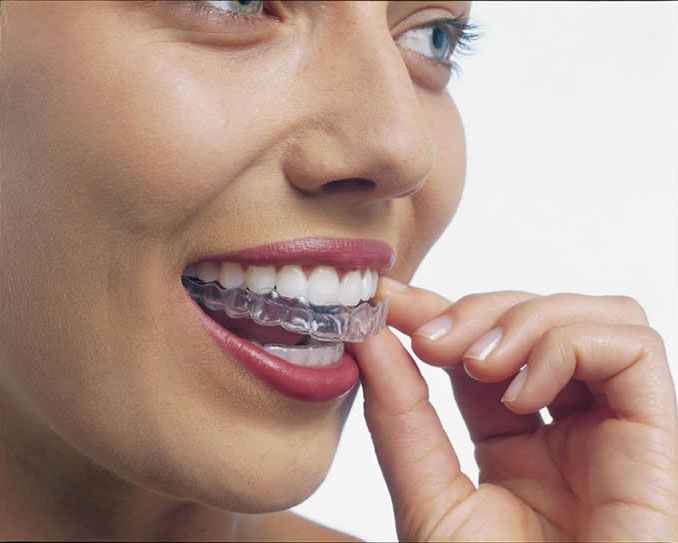
Invisalign: The Clear Alternative to Braces

If you or your teen need braces  but you wish there were an alternative to the traditional way of straightening teeth, correcting overcrowding, gaps, overbites, and underbites, Invisalign presents a solution. Invisalign involves removable, clear orthodontic aligners, eliminating the need for metal and brackets that cause discomfort. With 92% of teens feeling that metal braces keeps them from fitting in with their peers, Invisalign also offers a nearly unnoticeable alternative to the appearance of braces.   


How it works


Invisalign aligners are custom-made for each individual. Over a two-week period, your aligner gradually repositions teeth into their proper position. You then switch to your next aligner. Ideally, you should wear your aligner at least 20-22 hours per day. In this fashion, treatment occurs over roughly a 9-15 month time period, using roughly 18-30 graduated aligners. Outcomes for Invisalign, as well as costs, are comparable those of metal braces. To learn more, visit https://www.invisalign.com/how-invisalign-works/braces-before-and-after.  


Benefits of Invisalign over traditional braces


Invisalign is currently available for adults and teens. Some of the benefits of treating orthodontic conditions with Invisalign versus traditional braces include:


  • Smooth plastic for comfort instead of sharp metal and wires
  • Removable for eating, brushing, and flossing
  • No need to avoid certain foods
  • Easy to clean
  • Clear, making Invisalign almost undetectable to others
  • Little overall interference with your life and schedule, with a visit to your dentist or orthodontist approximately every 6 weeks
  • No negative self-esteem impact in teens due to appearance of metal braces
  • Less invasive


If you believe Invisalign sounds right for you or your teen, the first step is to consult with an Invisalign provider to develop a customized treatment plan. Allen Dental in West Salem, Wisconsin, is proud to offer Invisalign for our patients. To request an appointment, please visit our website and fill out our online contact form, or call us at 608-786-3303!

Thursday, February 16, 2017

Foods that Wear down Tooth Enamel

Tooth enamel is the hardest substance in your body, but that doesn’t mean it’s indestructible. Once worn down, enamel does not regenerate. Being aware of which foods dissolve and weaken tooth enamel will help you protect this vital piece of your dental health.


Enamel serves as your tooth’s first and foremost line of defense against decay and dental sensitivity. The hard, mineralized surface protects the nerves, dentin, and pulp below. Because enamel isn’t made up of living cells, your body cannot repair it if it becomes damaged.

Many believe that sugar is the worst substance for tooth enamel, and while sugar poses the risk of tooth decay, corrosive acidic foods and beverages actually present an equally serious threat. Some of the worst culprits include:

  • Soda and other carbonated beverages: Soda doesn’t just contain sugar--even diet soda and other carbonated drinks contain phosphoric acid that dissolves enamel. Citrus sodas have the added offense of containing citric acid, which also can erode enamel.
  • Acidic foods. Citrus fruits, vinegar-based foods such as pickles, tomatoes, sour candies, and fruit juices all upset the balance in your mouth by adding acid that erodes enamel.  
  • Hard candies. The sugar in hard candies tends to sit in the mouth too long. This prolonged contact with the enamel leads to bacterial growth. But don’t assume that hard candy is ok if you eat it quickly: biting on hard substances such as lollipops, lozenges, and ice can lead to chipped, cracked, and broken enamel.
  • Sticky foods. Dried fruit and other sticky foods result in particles getting stuck on and in between teeth, causing bacteria to grow and leading to decay.  
  • Foods and drinks that cause dry mouth. Alcohol, salty snacks, and coffee all have a dehydrating effect that leads to bacterial overgrowth. Keep your mouth balanced by staying hydrated with water, and rinsing your mouth out after eating or drinking.

It’s impractical for most people to avoid all acidic foods and drinks all the time. To minimize their negative impacts on enamel, try to incorporate them as part of a meal instead of as a stand-alone snack or drink. Rinse your mouth out after eating or drinking sugary and acidic items. Brush teeth with a soft brush and enamel-protecting toothpaste. Brushing hard or with an abrasive substance only weakens enamel further.  

Allen Dental, located in West Salem, Wisconsin, provides general dentistry, orthodontics, cosmetic dentistry, and teeth whitening for the whole family in a comfortable and friendly atmosphere. To learn more, please visit our website or call (608) 786-3303. See our 100% positive patient reviews on rateabiz.com! At Allen Dental, we believe everyone deserves to “smile with confidence.”

Wednesday, January 18, 2017

Tooth Talk and Resolutions!

For many, a new year’s resolution is to focus on a healthier lifestyle and make diet and exercise a top priority. For others, spending more quality time with family and friends is something they want to focus on at the start of the New Year. Even doing a better job at balancing a budget is a resolution that several choose to take on. But one New Year’s resolution that isn’t made enough of a priority is the health of your teeth. It’s still early enough in 2017 to make your oral health a priority, and consider having the fillings in your teeth examined and replaced.
Your friends and experts at Allen Dental recommend you pay more attention to your teeth and gums in 2017. In order for you to be as educated as possible about your teeth and their fillings, it’s important to get a quick lesson in amalgam, it’s potential risks, and safe alternatives for you to consider.
Amalgam consists of silver, mercury, tin, and copper. If you read the word “mercury” and started to panic about it’s presence in amalgam, let us give you some insight as to why you may want to consider a different source for a dental filling. Amalgam can be viewed as controversial because there is ongoing debate on how much mercury fillings released and how much the body absorbs from the fillings. Historically, amalgam fillings were thought to be chemically inactive, and that mercury could not be released in the human body once the filling was in the tooth. However, in recent years, updated data and testing has shown that very small amounts of mercury can be released in the form of vapor if the tooth filling wears down over time. Expecting mothers should practice caution and avoid unnecessary dental work. During pregnancy women should  not receive amalgam fillings as mercury can penetrate the protective linings on the womb. 
Luckily, there are plenty of safe alternatives to amalgam that you can consider on your next tooth filling like composite resin, glass ionomer, porcelain, and gold. Of these options, composite fillings are the most popular—this is due to the fact that they are white in color, meaning the filling matches the tooth more effectively. This is also considered a cost-friendly option.
Trust Allen Dental in the New Year to give you the dental fillings that work best for you and your health—we’d be happy to help you keep that resolution! Visit allendental.net or call 608-786-3303 for more information about our services and to schedule your next appointment!

Monday, December 19, 2016

The Features and Benefits of CariVu Technology

Recently, the new DEXIS CariVu technology made identifying dental cracks and caries (cavities) much easier. If you’ve ever been in to see a dentist for tooth pain, you probably know firsthand that it can be challenging to identify the source of the problem. CariVu makes visualizing the problem area easier and more precise, reducing the need for x-rays, and allows the patient to see the area, too.
CariVu technology uses safe, near-infrared (NIR) transillumination. Healthy enamel is dense, and does not absorb this near-infrared light. Dental cracks and decayed areas, however, are porous, and absorb the light. CariVu technology captures an image of the tooth in black and white, showing which areas of the tooth are healthy versus compromised. The image can then be enlarged and broadcast on-screen for the patient to see.

In essence, CariVu:
  • Is more precise than X-ray or older “penlight” methods of identifying decayed or cracked areas
  • Reduces the need for X-ray exposure
  • Allows for the most accurate imagery of the tooth, resulting in more precision during the restoration process
  • Involves no ionizing radiation
  • Is quick and painless
  • Can identify smaller and more types of cracks and cavities than X-rays, leading to more timely treatment and saving more of the tooth.

Would you like to see CariVu technology in action? You can watch a short news segment that The Rhode Show did about this breakthrough when it first came out, last year, right here!
Like all types of technology, dental technology is changing rapidly, all the time, to deliver better accuracy and results, as well as a more comfortable patient experience in the office. That’s why we at Allen Dental make a point of staying up-to-date on the latest technology. From CariVu, to Cerec 3-D same-day crown technology, Invisalign and 6-Month Smiles orthodontic treatments, and Waterlase MD drill-free laser restorations, Allen Dental makes your comfort and great outcomes our biggest priority.     

Allen Dental is located in West Salem, WI. Serving the entire family, we provide general dentistry, orthodontic services, teeth whitening and cosmetic dentistry, same-day crowns and more. For more information, please visit our website or call 608-786-3303. Don’t forget to check out our patient testimonials!

Wednesday, November 30, 2016

Don’t Wait To Replace Your Old Silver Fillings!

composite resin fillings
Do you have old silver fillings and find yourself feeling a bit envious of the millennials who appear to have no metal in their mouths? Today, cavities are most often filled with composite resin, which is the same color as the tooth it is bonded to. Those who had their cavities filled back in the 90’s and the decades prior most likely have amalgam, also known as silver fillings.

Silver fillings do not seal the tooth, they leak trace amounts of mercury vapor, and are not aesthetically pleasing. White composite resin fillings by comparison are safer for the individual, better for the tooth to which it’s bonded, and are virtually unnoticeable to the untrained eye. Because composite fillings are bonded with the tooth, they actually make the tooth itself stronger. On the other hand, metal used in amalgam fillings corrodes over time causing it to expand and contract, and over the years this can cause fractures in the tooth.  A broken tooth is not only painful but often requires a root canal or a dental implant if the tooth is lost. Both procedures are far more costly than replacing old silver fillings. 

At Allen Dental, we use composite resin fillings when correcting cavities. Composite resin filling is the most conservative restorative option for a decayed or broken tooth in dentistry today. The composite resin filling material is available in many shades to match the color of the tooth that it will be placed in. Using a white filling material is not just about aesthetics; it is also about conserving your tooth structure. When a tooth has decay present and needs to be fixed, a white filling only requires the removal of the diseased tooth structure (the cavity). In contrast, when using silver fillings, healthy enamel and dentin is removed.

At 
Allen Dental, we know it’s not a question of if, but when old silver fillings will fail and cause further decay and damage to your teeth. Protect your investment by replacing your old silver fillings with white fillings for a healthier, long lasting beautiful smile!


Friday, October 21, 2016

To Floss or Not To Floss?

This past August, the Associated Press caused quite a stir when they published a report about the weak evidence supporting the effectiveness of flossing your teeth. The AP looked at research conducted over the past decade, focusing on 25 studies that compared the use of just a toothbrush with the combination of using both a toothbrush and floss. According to the AP, the evidence for flossing is "weak, very unreliable," of "very low" quality (source). While news of this study sent shockwaves across the country (with many people pretty pleased about the findings, since nearly one-third of Americans do not floss), the American Dental Association and the American Academy of Periodontology are standing by their recommendations that flossing is effective, lack of evidence or not. Most dental professionals firmly believe flossing is effective in removing plaque, bacteria and soft deposits in the tight spaces between teeth that toothbrushes can’t reach.

If the AP’s published report has put you on the fence about flossing, let us help ease you off of it. Here are three good reasons you should continue to floss or get into a new habit of flossing:

1. Cleans places your toothbrush can’t. Teeth have four sides to them, and a toothbrush is only reaching the front and back. Food and bacteria can get stuck between your teeth, and if left there, can lead to gum disease. Floss can get in the spaces between each tooth to remove food particles and bacteria.
2. Strengthens your gums. Many people who don’t floss choose not to do it because it makes their gums bleed. In actuality, you should be flossing more if your gums bleed, since the act of flossing makes your gums healthier and the bleeding should stop after a few weeks of dedicated daily flossing.
3. Helps prevent other diseases. Research suggests a connection between gum disease and other diseases like diabetes, heart disease, and dementia. People with gum disease are almost twice as likely to have heart disease as people with good periodontal health. Daily flossing in addition to daily brushing can help prevent more serious health issues down the road.


Even if current research suggests a lack of evidence to support flossing, we at Allen Dental still recommended you do so because it is low risk, low cost. Meaning that even if it doesn’t help you (and we believe it does!), it will not hurt you either and it is not an expensive habit to keep up. If you’re still unsure, feel free to bring it up to Dr. Allen at your next appointment, he’ll be happy to answer any questions you may have. Do you need set up an appointment? Schedule yours TODAY at, allendental.net!